Yes. With an Open Water certification you can dive the cenotes of the Riviera Maya on a guided cavern dive: you stay where daylight from the entrance still reaches you, follow a fixed guideline behind a qualified guide and never pass the limits of the cavern zone. Full cave diving, beyond the light, is a different discipline that needs its own training.
This guide explains where that line sits, what a cavern dive actually looks like and how to prepare so you enjoy it instead of fighting your buoyancy.
What a cenote is
The Yucatán Peninsula is a flat slab of limestone that was once a coral reef. Over thousands of years, rainwater dissolved the rock and carved a huge network of flooded tunnels and chambers under the jungle. A cenote is a place where the roof collapsed and you can reach that water from the surface.
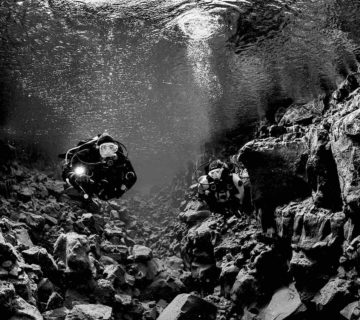
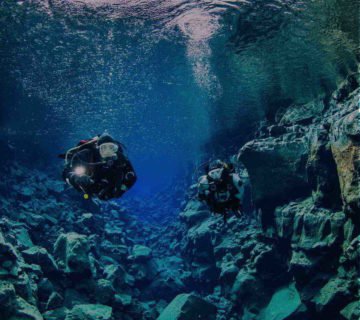
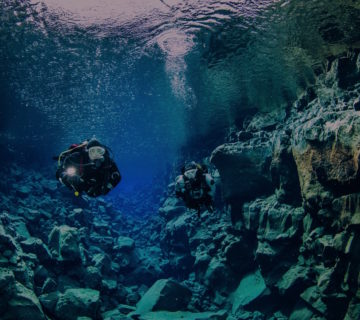
Inside you find fresh water so clear it looks like air, beams of sunlight, stalactites and columns that formed when the caves were dry, fossils in the walls and, in some cenotes, a halocline: the shimmering layer where fresh water sits on top of salt water. There are no reef fish or coral. It is a completely different kind of dive.
Cavern vs cave: the line that matters
Cavern zone. The part of the system where natural light from the entrance is visible at all times. Training agencies add limits on distance from the surface, commonly in the range of 40 to 60 meters (130 to 200 ft) of swimming distance, depending on the agency. Guided cenote tours for Open Water divers run inside this zone, along a permanent guideline.
Cave. Everything beyond the light. Cave diving needs dedicated training, different equipment and strict procedures, and it is not a place for an Open Water diver under any circumstances. Most cenotes have cave sections, and the end of the cavern route is often marked with a warning sign.
The difference is not about courage. In the cavern you are always a short, lit swim from open water. In the cave, you are not.
What a guided cavern dive looks like
The day starts with an orientation on land: the layout of the cenote, buoyancy and trim, light signals and how to follow the guideline. In the water you swim in single file behind your guide, close to the line, at a calm pace. Your guide sets the route, watches everyone’s air and gives the turn signal.
Because there is a ceiling above you, you cannot swim straight up to the surface. That is why guides plan air conservatively and why the briefing matters more here than on a reef dive.
How to prepare
- Buoyancy is everything. The floor is fine silt, and one careless kick can cloud the water for everyone behind you. If you have not dived for a while, do an ocean dive first to get your trim back.
- Hands off. Do not touch the walls, the floor or the formations. They took thousands of years to grow.
- Watch your fins. A gentle frog kick keeps silt down. If you only know the flutter kick, keep it small and slow.
- Follow the signals. Stay on the line, stay in position and turn when your guide turns.
- Bring your card and logbook. We need to see your certification before the dive.
Cenote diving with PDCK
We run cenote dives as private tours, with the cenotes chosen to suit your level and the day. An Open Water certification is required and hotel pickup is included. Like all our activities, cenote dives are paid in advance to secure the booking. See the details on our activities page.
Not certified yet? Read Scuba or Freediving: Which Course to Take in Playa del Carmen? You can also see the cenotes on a single breath on our freediving course, or from the surface on a cenote snorkeling day.
Related guides
- Diving Cozumel from Playa del Carmen: Ferry or Boat?
- C-56 Wreck Dive in Puerto Morelos: What to Expect
- Bull Shark Diving in Playa del Carmen
Want to dive the cenotes? Send us your dates, how many divers and your certification level, and we will plan the day.