Most people need about 9 to 12 hours of lessons to ride on their own, which is why our full beginner course is 12 hours. Some get there faster, some need more time. No honest school can promise a fixed number of hours, because the pace depends on you, the wind and the conditions on the days you ride.
It helps to be clear about what “learn” means. Flying a kite safely, getting up on the board and riding independently are three different milestones.
The stages
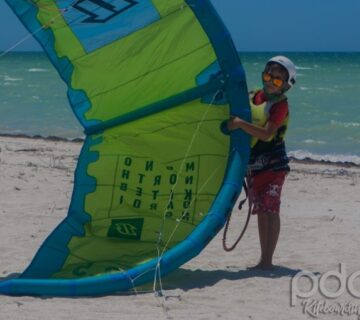
1. Kite control on the beach. Setting up, safety systems, launching and landing with an instructor, and flying the kite with precision. This is where your first hours go.
2. Body dragging in the water. Using the kite to move through the water without the board, then recovering the board. It teaches power control and self-rescue.
3. Water starts. Getting up on the board with the kite. Expect many attempts: timing the kite’s power with your stance takes practice.
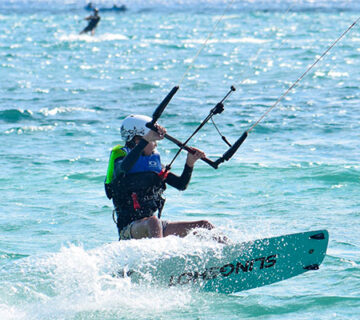
4. Riding and staying upwind. Riding in both directions and holding your ground instead of drifting downwind. This is the point where you start becoming independent.
What speeds you up or slows you down
- Wind on your days. Steady wind makes learning faster. Light, gusty or changing wind slows progress.
- Board-sport background. Wakeboarding, surfing, snowboarding or windsurfing usually help with the board part.
- Weight and fitness. You do not need to be an athlete, but reasonable fitness helps you stay fresh across sessions.
- Session spacing. Back-to-back days keep the feeling fresh. Long gaps mean relearning.
- Private vs paired. In a private lesson you have the kite all session. In a paired lesson two people of similar level and build share the instructor and gear, alternating.
How to plan your days
Because lessons follow the wind, the hours do not need to fit a fixed timetable. If you are aiming for independence, plan a stay of at least a week inside the main season (November to May) and tell us your goal when you book. We spread the hours across the best wind days of your stay. See When Is the Wind Season? for planning details.
What about after the course?
Riding independently is the start. Most new riders spend their next sessions improving upwind riding and transitions. IKO certification records your level, which makes renting equipment at other centers easier.
Is it different with wing foiling?
Yes, it is a different learning curve. Read Kiteboarding vs Wing Foiling.
Next step: See our kite lessons or send us your dates and level.